

In many cloud applications, one of the biggest risks is not performance or scalability — it’s how we handle credentials.
API keys in code. Connection strings in config files. Secrets stored in environment variables.
Even today, many systems rely on manually managed credentials — and that’s where problems begin.
This is exactly what Managed Identity solves.
What Is Managed Identity?
Managed Identity in Azure allows your application to authenticate with Azure services without storing credentials in code.
Instead of managing secrets yourself, Azure handles identity creation and lifecycle automatically.
Your application simply says: “I need access to this resource.” Azure verifies identity behind the scenes.
No keys. No secrets. No manual rotation.
Why It Matters
Traditional credential management introduces:
- Security risks (leaked keys, exposed configs) • Operational overhead (rotation, storage, access control) • Human error (misconfigured permissions)
Managed Identity removes these problems by design.
How It Works (Simple View)
When you enable Managed Identity for a service (App Service, VM, Container Apps, etc.):
- Azure creates an identity for your resource
- You assign permissions (RBAC) to that identity
- Your application requests access via Azure SDK
- Azure issues tokens securely
No credentials are ever exposed to your application code.
Where You Should Use It
Managed Identity is ideal when your app needs to access:
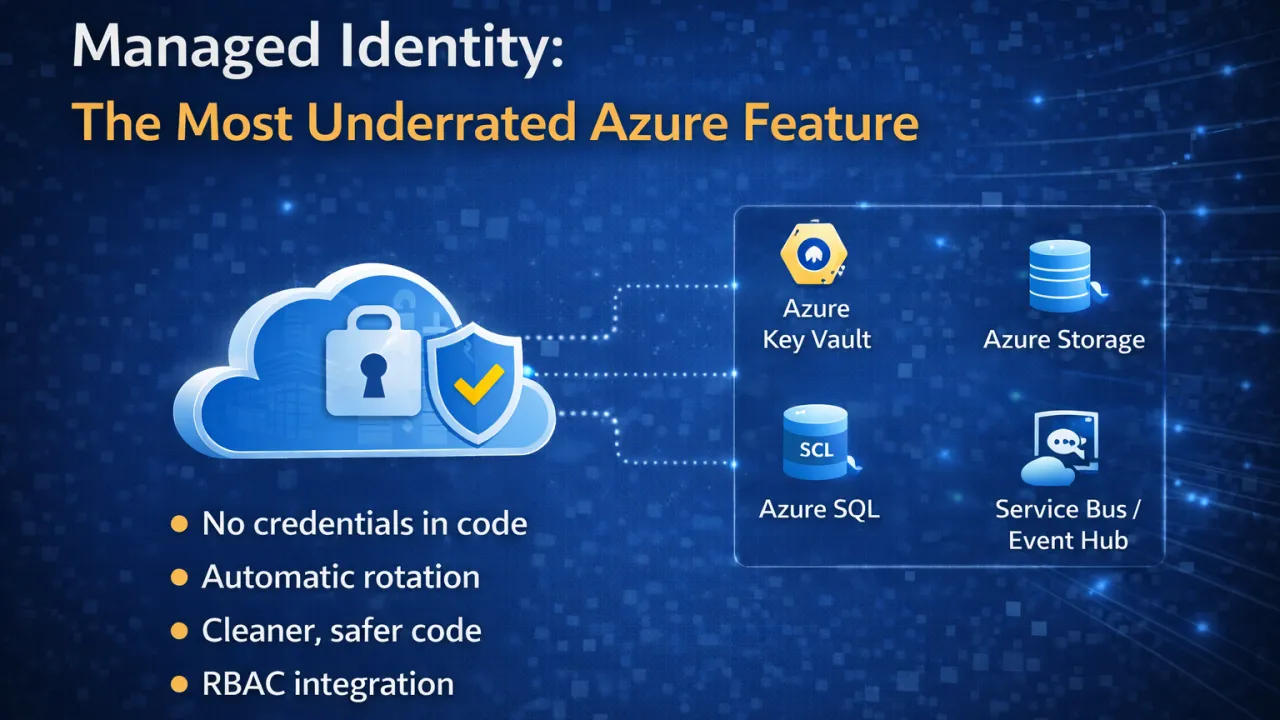
- Azure Key Vault • Azure Storage • Azure SQL Database • Service Bus / Event Hub • Any Azure resource with RBAC support
If your app talks to Azure — you should consider using it.
Benefits in Real Systems
Using Managed Identity leads to:
- Stronger security posture • Zero secret management • Automatic credential rotation • Cleaner and safer code • Easier compliance and auditing
It aligns perfectly with Zero Trust architecture.
Common Mistakes
Despite its advantages, many teams:
- Continue using connection strings unnecessarily • Store secrets in config files • Avoid Managed Identity due to lack of awareness • Overcomplicate authentication setups
In most cases, the simpler and safer option already exists — but goes unused.
The Real Insight
Managed Identity is not just a feature — it’s a shift in how we think about authentication.
Instead of managing secrets, we rely on identity and access control.
In modern cloud systems, security should not depend on how well you hide secrets. It should depend on how well you eliminate them.