

In modern cloud applications, managing secrets, configurations, and feature flags is not just a setup task — it’s a critical part of system design.
Many applications still mix these concerns together: Hardcoded values. Secrets in config files. Feature toggles hidden in code.
This leads to security risks, deployment friction, and poor flexibility.
In Azure-based systems, separating these concerns properly is essential.
The Three Different Responsibilities
These are often confused — but they serve very different purposes:
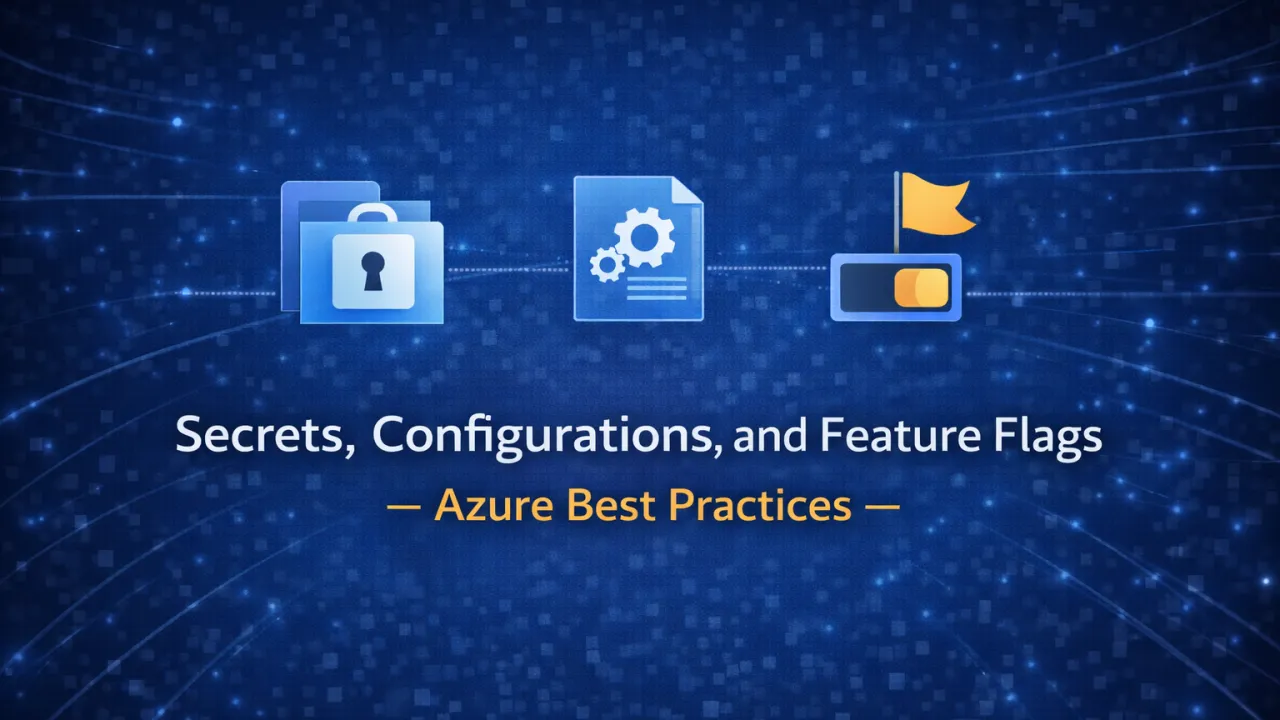
- Secrets → Sensitive data (API keys, connection strings, tokens) • Configurations → Environment-specific values (URLs, settings, limits) • Feature Flags → Runtime behavior control (enable/disable features)
Treating them the same leads to fragile systems.
Secrets: Never Store, Always Retrieve
Secrets should never live inside your codebase or config files.
Best practice in Azure:
- Use Azure Key Vault • Access secrets via Managed Identity • Avoid storing secrets in appsettings.json or environment variables • Enable automatic rotation where possible
Secrets should be fetched securely at runtime — not stored.
Configurations: Externalize Everything
Configurations define how your app behaves in different environments.
Best practice:
- Use Azure App Configuration or environment variables • Keep configs outside the codebase • Separate dev, staging, and production values • Support dynamic reload without redeployment
Your application should adapt to environments — not be tied to them.
Feature Flags: Control Without Deployment
Feature flags allow you to change behavior without redeploying code.
Use cases include:
- Gradual feature rollouts • A/B testing • Turning off faulty features instantly • Testing in production safely
In Azure, feature flags integrate directly with App Configuration.
Why This Separation Matters
When done correctly, you get:
- Stronger security (no exposed secrets) • Faster deployments (no config changes in code) • Safer releases (controlled feature rollouts) • Better operational flexibility
When done poorly, you get:
- Risk of secret leaks • Frequent redeployments • Hard-to-control production behavior
Common Mistakes
Many teams still:
- Store secrets in config files • Mix configs and feature flags together • Hardcode environment-specific values • Redeploy apps for small configuration changes
These patterns slow down development and increase risk.
The Real Insight
Modern cloud applications are not static — they are dynamic.
Your system should allow you to:
- Change behavior without redeploying • Secure access without exposing credentials • Adapt environments without rewriting code
Secrets, configurations, and feature flags are not just tools — they are control mechanisms for modern systems.